Buying An Intracoastal Home In North Palm Beach
March 24, 2026
March 24, 2026
Picture your boat at the ready, coffee in hand, and a straight shot to open water. If you’re eyeing North Palm Beach for Intracoastal living, the right home can deliver that ease. You want a property that fits your vessel, your lifestyle and your long-term plans. In this guide, you’ll learn how bridge clearances, dock depth, ocean access, and orientation all shape your day-to-day and your resale value. Let’s dive in.
North Palm Beach sits along the Lake Worth Lagoon with direct ocean access through Lake Worth Inlet. The inlet and federal channel are actively maintained, which supports reliable passage for a wide range of boats. Federal channel maintenance records confirm ongoing dredging work, a real advantage for deep-draft owners.
You also have multiple full-service marinas close by. Facilities like Safe Harbor Old Port Cove and North Palm Beach Marina offer fuel, service, and a range of berths. That network adds flexibility if a private dock will not fit your current or future boat, as noted when Old Port Cove joined the Safe Harbor system.
Your route matters as much as your dock. The Parker (US‑1) Bridge has about 25 ft of vertical clearance when closed at high tide and opens on a schedule. Donald Ross typically offers a higher closed clearance near 35 ft, while other spans vary. For official opening times and rules, review the federal drawbridge regulations for this corridor.
Always compare your boat’s air draft to the posted clearance and then factor in the tide at your planned transit. Small tidal changes can add or subtract valuable inches. Use NOAA tide predictions to plan your timing.
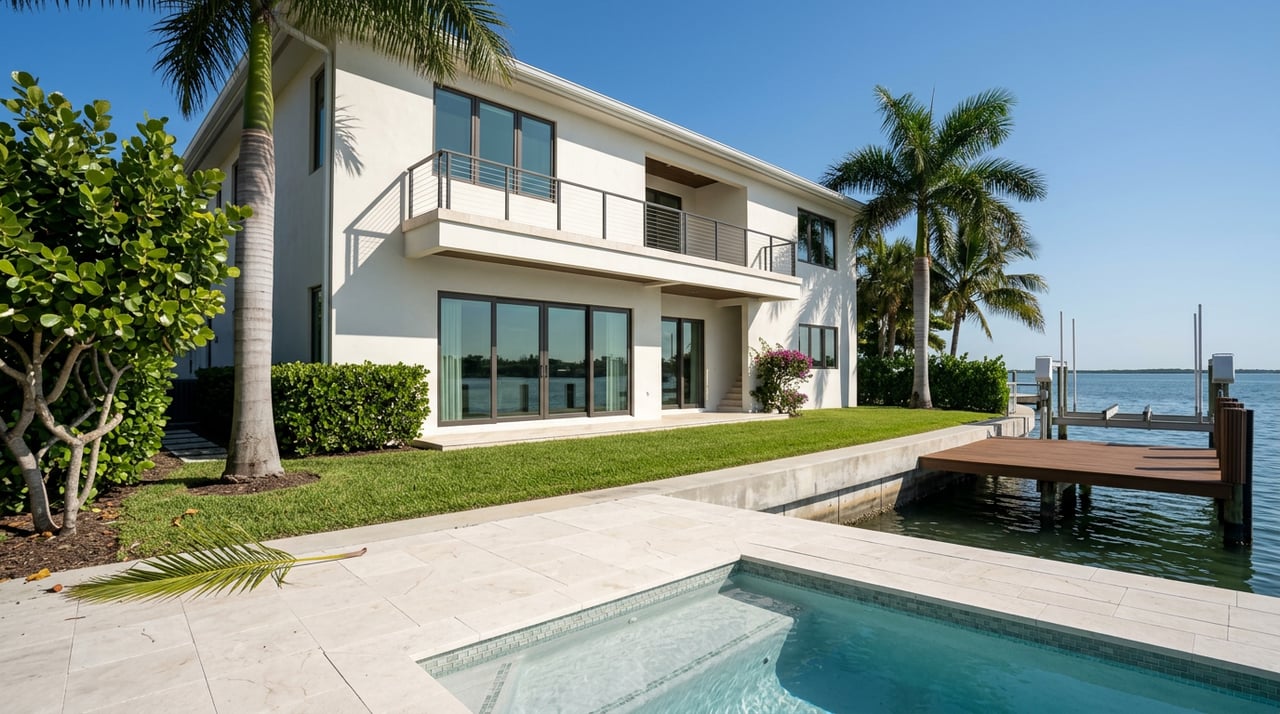
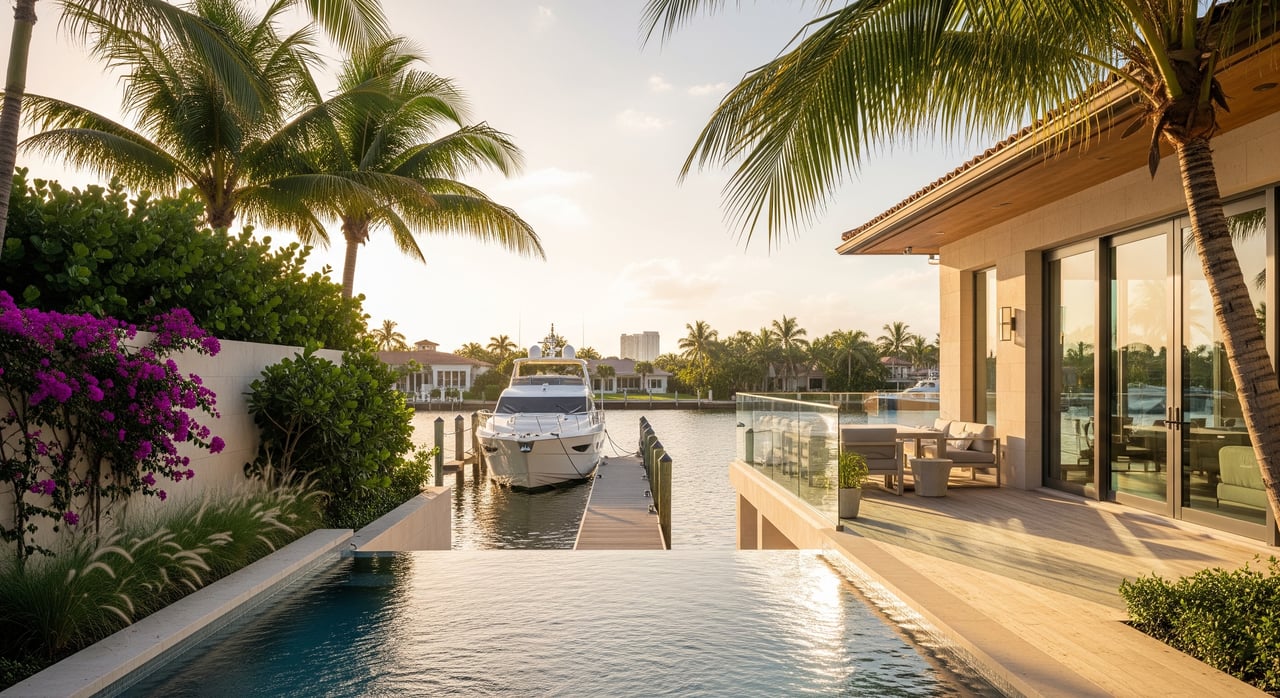
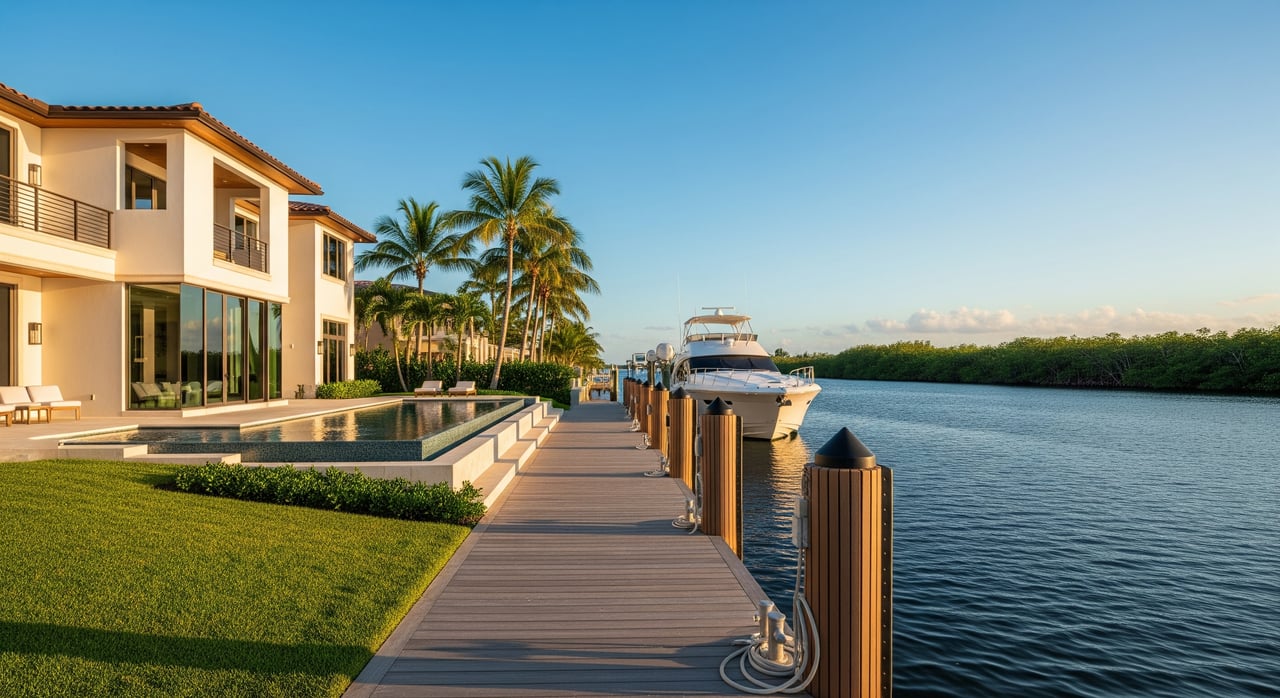
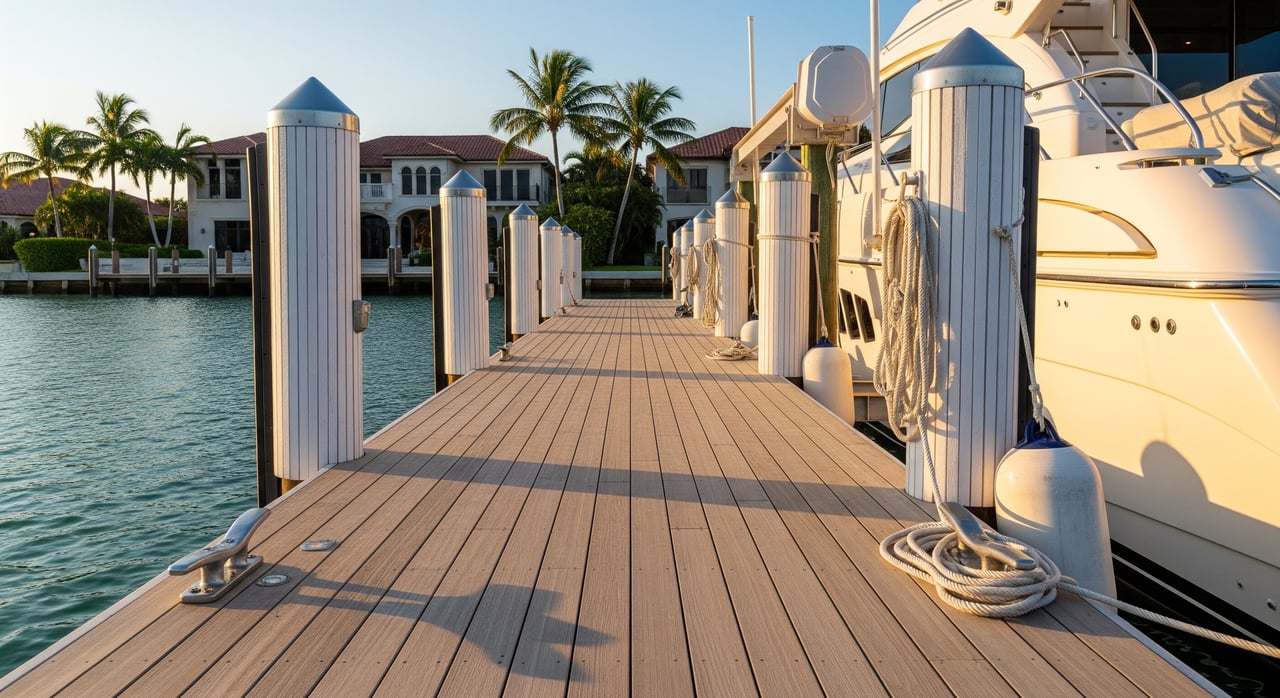
The value of a waterfront home starts with a usable dock. Focus on dock type and condition, pile spacing, cleats, power, water and any boatlifts or davits. Confirm the rated capacity of lifts and the permitted maximum vessel length.
Depth is nonnegotiable. Ask for recent soundings at mean low water at the bulkhead and along the fairway. Nearby marinas list berth depths that often range from single digits to low double digits, which is a quick reference point. Cross-check with local marina depth listings.
Seawall health is critical. A marine contractor should evaluate tie rods, cap condition, settlement and any signs of scour. If you plan changes to docks, lifts or seawalls, expect to coordinate village, county, and state permits, and confirm any federal navigable waters requirements.
Waterfront living is also about how the property feels. East-facing lots lean into sunrise light and broad lagoon views, while west-facing lots can offer sunset colors depending on sightlines. Lot width influences slip layout options and how easily larger vessels can be berthed.
Check fairway width and turning room on aerials. Narrow canals or shallow bays can limit your safe LOA and beam during maneuvers. Consider wake exposure along busier runs of the Intracoastal versus protected harbors if you want calmer water at the dock.
On the water, specific features tend to command the premium: usable, permitted dockage, reliable depth, quick time to the inlet, wide waterfront footage, and strong seawall and dock condition. Buildings or communities with on-site slip access often attract buyers who value convenience.
Local housing indices place North Palm Beach’s typical home values in the mid six hundreds, with waterfront properties trading at a wide range above that depending on the features above. Expect variation by view corridor, access and water quality. Peer-reviewed research shows waterfront premiums are real but heterogeneous, with conditions and access type shaping value over time (academic overview).
Sometimes your dream boat is larger than your current dock or permit allows. Full-service facilities like Safe Harbor Old Port Cove and North Palm Beach Marina provide seasonal or long-term berthing, fuel, service and haul-out options. That flexibility lets you buy the right home now and adjust your vessel strategy as your needs evolve.
Use this to evaluate every Intracoastal listing:
You want a home that fits your life on the water without surprises. A boutique, concierge approach helps you assess dock usability, align bridge and tide realities with your boat, and navigate permits and vendors with confidence. You also gain tailored search support and curated access, including off-market opportunities when privacy or timing matter.
From shortlisting homes by true water access to coordinating marine contractors and marinas, you get a streamlined, data-backed process. When it is time to write and win, disciplined negotiation and local intelligence help you secure the right property on the right terms.
Ready to find the Intracoastal home that fits your boat and your lifestyle? Connect with Jennifer Lourie for a private consultation.
Stay up to date on the latest real estate trends.
Jennifer is excited to continue her entrepreneurial path in the Real Estate industry and the passion she has for assisting people when it comes to finding their dream homes knows no bounds.